
For a long time I have been interested in visual business communications. How can we use graphics to provide simplicity, clarity and efficiency. In the world of work, there is an overload of reports, spreadsheets, emails and routines/procedures etc. Therefore its imperative that we become knowledge masters – not by just feeding our brains with more fact, figures and instructions but by summarising, indexing and prioritising what we receive and what we want to communicate. There are many tools to do this. These are the three I used regularly:
Flow Charts: A great tool to condense a massive amount of information in a concise and clear way. Flow Charts helps map the different steps in a process and then identify any weaknesses. Its a great way for presenting and explaining long and detailed routines/procedures – very useful if used at heavy process driven organisations. If the map is too long and complicated then its not the chart’s fault, its the system you are working with! And if you do produce a complicated flow chart then you have fertile ground for identifying problems, improving processes and reducing waste.
![damn-thing-work[1]](https://robertvernon.org/wp-content/uploads/2015/12/damn-thing-work1.jpg?w=329&h=441)
Mind Maps: The tool for radiating thoughts in a creative process for the presenter and the audience. The word and pictures are the hooks for the brain to think, remember, spread thoughts and ideas. They should always be developed and read in a clockwise manner. A good Mind Map is a treat for our brains which are usually overburdened with mono tone (monotonous ) written sentences. The brain is always craving a colourful image and hooks to make connections in your vast memory of knowledge, experience and creativity.
![the-vicious-circle-everything-is-integrated2[1]](https://robertvernon.org/wp-content/uploads/2015/12/the-vicious-circle-everything-is-integrated21.jpg?w=429&h=288)
Mind Trees: This is my own developed tool based on other similar techniques and ideas. A Mind Tree is a great way for management to develop their plans and concepts and put them into a format that can be explained on one page. Then just as importantly Mind Trees can help operational co-workers understand and implement: for example company business ideas, the factory customer goals, the latest management trends and organisational restructuring etc. Mind Trees have strict rules. There must be one goal, 4 x needs and then 12-16 x drivers . Then finally the described actions required to achieve the goal!
![the-company-supply-chain-code-of-conduct[1]](https://robertvernon.org/wp-content/uploads/2015/12/the-company-supply-chain-code-of-conduct1.jpg?w=444&h=343)
Business visuals should work to present themes, processes and ideas; grabbing attention, promoting comprehension and motivating people to use their precious brain space, energy and time to achieve real understanding and further creativity in the maintenance and implementation of their work.
Mark K. Astley: Robert Vernon Associates Ltd.
 the customer experience and the supply chain. One of the classic examples on the consequences of this removal was in the sourcing of pizza cutters in China about 20 years ago. The local buying team and its vendor produced and supplied the circular knife as per dimensions and colour scheme – except it did not cut!! The team and the factory had no idea what a pizza cutter was! They did not understand the customer experience and probably did not know what a pizza was!

 During the early 1980’s the Quality Circle idea took hold in the electronic and automotive industry. One of the most famous case histories of its successful implementation was at Jaguar cars in the UK, where the workforce from top management to shop floor operator formed teams to understand and improve build quality. At the start of implementation they were not producing jaguars but dogs!! Since then of course the company has gone from strength to strength and they now produce a world renowned quality product.
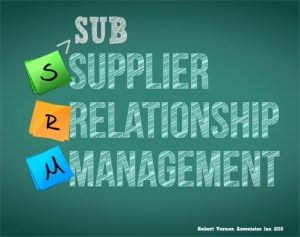 Transparency and management custody down the supply chain are very important in today’s business – from avoiding horsemeat in processed food to eliminating clothing production in structurally dangerous factories. Knowing where products come from is paramount to secure:
 To manage and handle sub suppliers in a practical and concise way Buyers should consider:
 It starts with designing a great product at a low price. There is skill in designing an architect’s chair for 4000 dollars, but the greater skill is in designing a chair of fantastic form and function for 40 dollars!!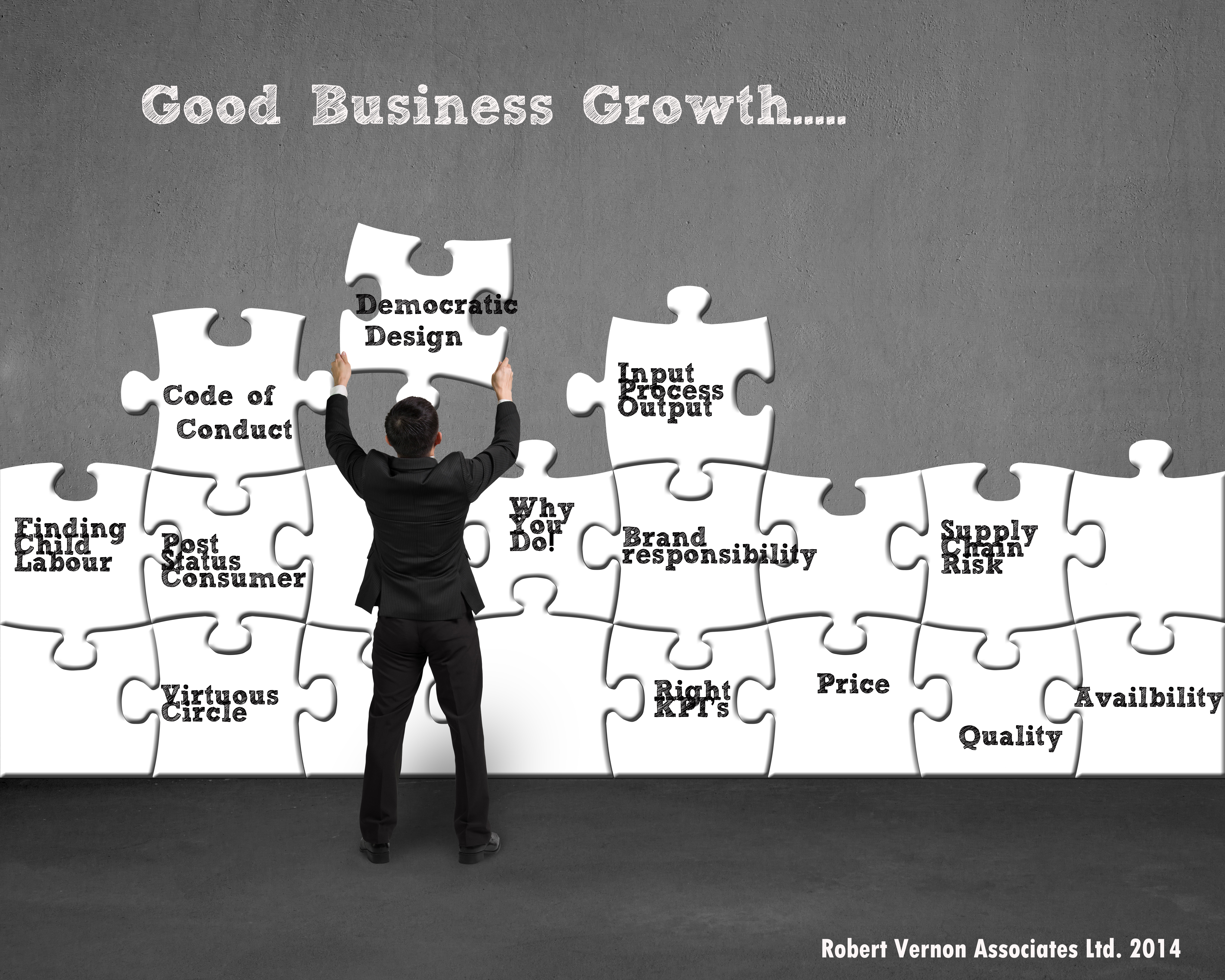




 robertvernon.org